State Agencies Partner to Enhance PA Fishing, Boating Opportunities
منتشرشده: · بهروزرسانی: · ایران
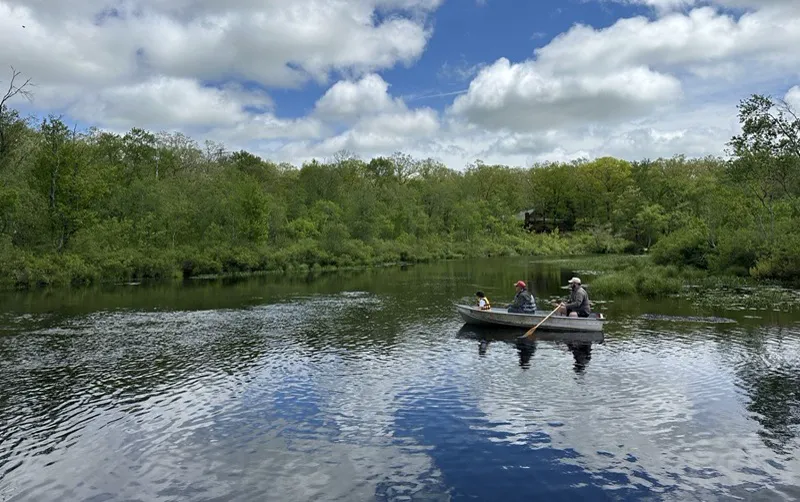
## Many programs help to restore the Bay, its water quality, and wildlife through common goals focused on education, advocacy, and implementation of practices that improve larger landscapes and offer benefits to private…
Many programs help to restore the Bay, its water quality, and wildlife through common goals focused on education, advocacy, and implementation of practices that improve larger landscapes and offer benefits to private landowners
The Chesapeake Bay historically supported an abundance of wildlife within a diverse ecological community. An abundance of blue crabs, oysters, menhaden, rockfish, ospreys, and many other wildlife species have made this region a home and a valued destination for as long as humans have occupied the continent. The Bay region has long supported a diverse culture, a productive food resource, and an outdoor recreation paradise.
But over time, Bay productivity has declined. While still a diverse ecosystem, the overall health of the Chesapeake has been affected by human impacts that have degraded water quality. Development, contaminated stormwater, runoff from agricultural operations, abandoned mines, and deforestation have all contributed to declines in fish and wildlife populations via water quality impacts.
While the Bay itself begins just below Pennsylvania’s southern border, the headwaters of the watershed begin far to the north, near Cooperstown, New York. Flowing through central Pennsylvania, the Susquehanna River Basin drains a significant portion of Pennsylvania’s waterways into the Bay. Land use practices throughout this region contribute to the transportation of excessive sediment, nutrients, and pollutants downstream. As a result, Bay water quality has become impaired and the productive ecosystem that once existed requires significant landscape-level restoration efforts.
Not only has Chesapeake Bay health declined, but local waterways throughout the watershed have also suffered. Excessive organic nutrient loads, sediment discharges, and pollutants impact local water quality, degrading their value for local fish and wildlife species. Many migratory species like ducks and geese rely on these waterways during their annual migrations. Trout, insects on which they feed, and other aquatic organisms that reside in local waterways year-round require cool temperatures, high dissolved oxygen, and rocky substrates that can become impacted by sedimentation, turbidity, and nutrient loads. These inputs directly impact the quality of hunting and fishing opportunities throughout the watershed.
Fortunately, a diverse group of partners, including hunting and fishing-focused organizations, have worked together to develop programs to work toward restoration of the Bay and its expansive watershed. These programs have many common goals, focusing on education, advocacy, and implementation of practices that improve landscapes throughout the watershed. Water quality programs are implemented by multiple government agencies and non-governmental entities, and funds are distributed to a diverse array of groups that are committed to restoration efforts. Improving water quality by applying conservation practices directly benefits fish and wildlife species and those of us that enjoy recreating throughout the watershed. As hunters and anglers, these programs – highlighted below – directly benefit the outdoor traditions that we cherish.
The Chesapeake Bay Program: A Collaborative Commitment to Bay Restoration
The Chesapeake Bay Program is a regional partnership that brings together a coalition of groups with the common goal of restoring and protecting the Bay. Started in 1983, the program uses the Bay Agreement as a framework to guide Bay ecosystem restoration. Multiple funding programs exist that deliver resources to meet the goals of the Bay Agreement, including Innovative and Sediment Removal Grants (INSR), Small Watershed Grants (SWG), and Most-Effective Basins Grants (MEB). These program funds provide organizations with the resources to implement practices that benefit local waterways throughout the Bay Watershed, ultimately improving the health of the Bay itself. Funding has also been provided for NOAA to focus on oyster restoration, menhaden research, and invasive blue catfish mitigation. Through education, advocacy, and implementation, this program aims to restore healthy landscapes, clean water, and a resilient ecosystem for fish and wildlife species.
PADEP Funds for Clean Water Projects
The Pennsylvania Department of Environmental Protection (DEP) recently awarded over $3 million to conservation projects in eight Pennsylvania counties. These funds are delivered through the Environmental Protection Agency’s Section 319 Nonpoint Source Management Program, which directs federal dollars to states, territories, and Tribes for projects that improve water quality and restore impaired waterways. These projects implement practices that are outlined within local Watershed Implementation Plans to reduce non-point source pollutants like agricultural nutrients, sediment, and stormwater runoff. Funds are awarded to County Conservation Districts, Trout Unlimited Chapters, and other nonprofit groups to implement projects like floodplain restoration, riparian forest buffers, abandoned mine reclamation, and stream stabilization. While some of these projects exist outside the Chesapeake Bay Watershed, the same concept applies to restoration of the Delaware and Ohio River Watersheds of Pennsylvania.
Growing Greener Fund Supports Conservation Projects in Pennsylvania
As part of Pennsylvania’s Growing Greener Program, DEP is also providing over $17 million that will used for 89 different water–quality-focused projects in the Commonwealth. This funding will be made available to conservation districts, local municipalities, and nonprofit conservation organizations to support a diversity of projects, including stream stabilization, manure storage, stream restoration, fish habitat structures, stormwater management structures, and many others. The Growing Greener Fund is the largest single investment of state funds dedicated to environmental resources in Pennsylvania.
PFBC Funds Improve PA Waterways
The Pennsylvania Fish and Boat Commission annually awards funds for restoration projects through the York and Lancaster Counties Habitat Improvement Grant, which goes directly to watershed conservation projects in these two counties. Lancaster County is often targeted for conservation dollars, due to its fertile farmland and intensive agricultural production. Many of the watersheds in the county have been impaired by centuries of intensive agricultural production, carrying sediment and nutrient loads to the Chesapeake Bay. The PFBC-funded projects include Agricultural Best Management Practices on farms, stream restoration projects, floodplain restorations, fish habitat structure installations, and/or dam removals – which benefit many native aquatic organisms by restoring natural flow, reducing stream temperatures, and supporting fish passage.
NFWF Small Watershed Grants
The National Fish and Wildlife Foundation provides Small Watershed Grants through a program that also aims to restore water quality and habitats throughout the Chesapeake Bay Watershed. These grants include improvement, restoration, and protection components. Another diverse funding program, SWG grants can be applied to a multitude of practices that further increase the health of the Bay ecosystem. NFWF is currently accepting applications for organizations that are interested in utilizing this funding.
Farm Bill Programs
Much of the land in the Chesapeake Bay watershed is privately owned. On this land, voluntary, incentive-based conservation programs are incredibly important for creating both habitat and access. These programs are governed and funded through Title II of the Farm Bill. Landowners can enroll in programs like the Environmental Quality Incentives Program (EQIP), the Conservation Stewardship Program (CSP), and the Conservation Reserve Program (CRP) a – just to name a few. These programs support practices like planting forest or grassland buffers on field edges, managing fertilizer applications, managing livestock grazing, and diversifying forests.
Programs and practices vary, but their shared goal is to provide resources that help landowners better manage their land. By addressing soil, water, and wildlife issues, landowners can use these programs to create more resilient and productive landscapes, resulting in better quality habitat for fish and wildlife. The large scale of our private lands and the personal cost associated with their management underscores the importance of Farm Bill conservation programs. Landowners interested in private land conservation can contact their local NRCS office for information on Farm Bill programs.
Support Bay Restoration
The Chesapeake Bay and its watershed create an incredibly diverse setting for extraordinary hunting and angling opportunities not that far from civilization. While human land use practices have negatively impacted Bay health, there is hope for recovery. With your support, continued restoration through funding programs and the work of conservation organizations ensures that this resource can be protected for generations to come.
Banner image of Chesapeake Bay: Credit Timothy Pohlhaus
The Hunter & Angler’s Guide to the Farm Bill
We know it can be challenging to break through the alphabet soup of program acronyms to understand why the reauthorization and improvement of Farm Bill conservation programs is a top priority. In The Hunter & Anglers Guide to the Farm Bill, we demystify the Farm Bill and the crucial conservations programs that sportsmen and women should care about.